
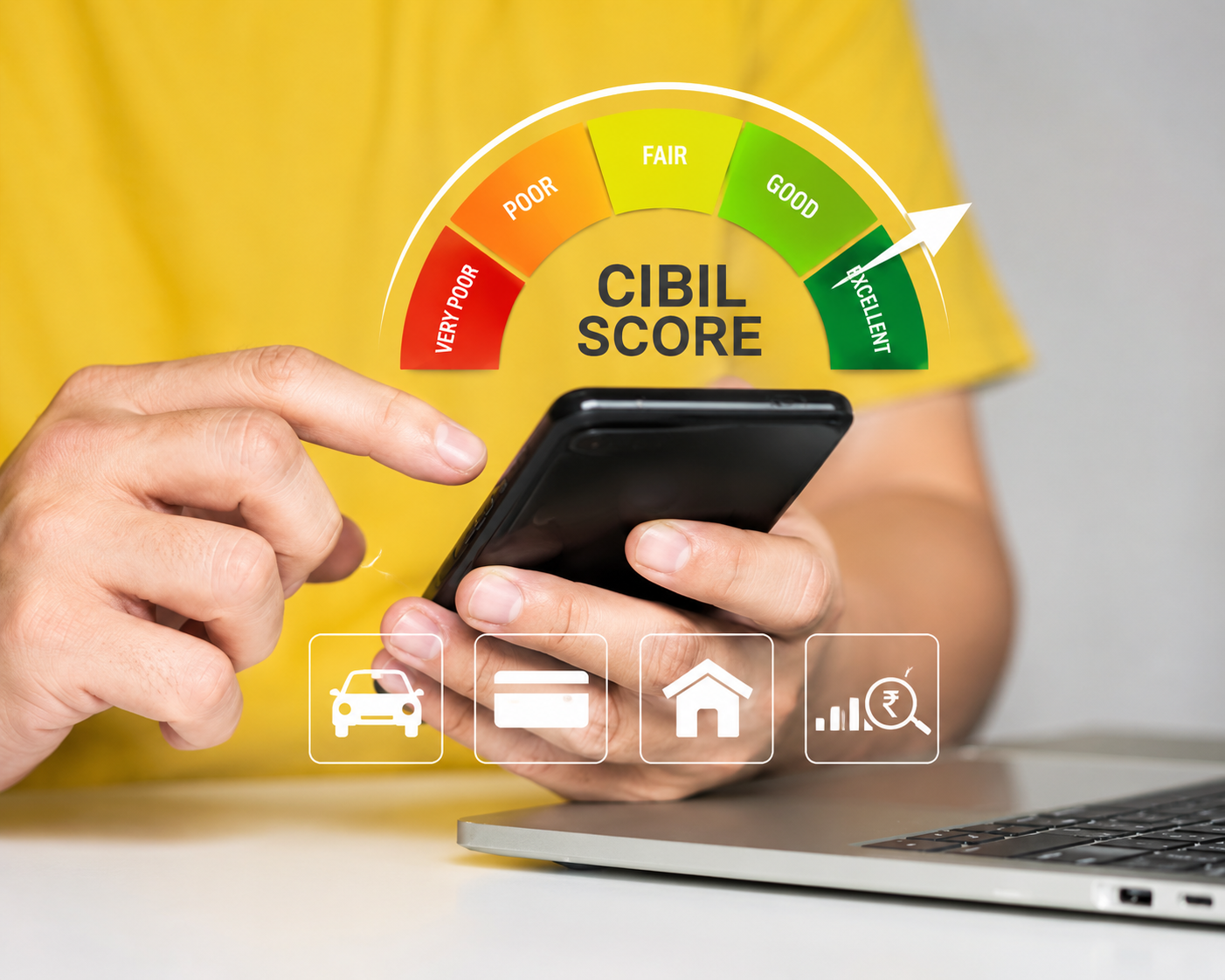
When you apply for a loan or credit card, your CIBIL score is the first thing that a lender will consider. Basically, it offers them an idea about your past credit behaviour and how you have managed any borrowed money.
A person’s CIBIL score usually ranges from 300 to 900. And you need to understand where your credit score falls in this range to make well-informed borrowing decisions. Moreover, it must be noted that it is only part of the overall loan evaluation process, not the only factor it depends on.
Let’s explore the topic a little more.
What Is a CIBIL Score?
A CIBIL score is a three-digit number that represents your credit history and repayment behaviour. It is calculated using information such as your previous loans, credit card accounts, payment history, and credit utilisation.
Lenders may consider your CIBIL score while evaluating a loan application because it helps them understand your credit behaviour.
A stronger credit profile may indicate responsible repayment habits, while a lower score may require lenders to assess other aspects of your finances more carefully.
CIBIL Score Range Explained
The CIBIL score range generally falls between 300 and 900. The following ranges provide a broad indication of credit health:
CIBIL Score Range | General Indication |
300-549 | Low/Poor |
550-649 | Fair |
650-749 | Good |
750-900 | Very Good/Excellent |
These ranges are indicative and should not be treated as fixed approval categories. Every lender may have different eligibility criteria, risk policies, and requirements.
A score of 750 or above is generally viewed positively, but lenders may also consider income, existing debts, employment, and repayment capacity before making a decision.
What Is Considered a Good CIBIL Score for a Personal Loan?
A higher CIBIL score can strengthen your credit profile when applying for a personal loan. It may indicate that you have managed previous credit responsibly.
However, a good score does not guarantee loan approval. Lenders may also assess:
- Monthly income
- Existing loan and credit card obligations
- Employment or business stability
- Repayment capacity
- Current financial commitments
Therefore, borrowers should consider their complete financial profile rather than focusing only on their CIBIL score.
How Does a Low CIBIL Score Affect Personal Loan Eligibility?
A low CIBIL score may make it more difficult to qualify for certain loans. However, lenders do not necessarily rely on the credit score alone.
Applicants with a lower score should pay particular attention to:
- Stable income
- Existing financial obligations
- Repayment capacity
- Employment or business continuity
- Accuracy of credit information
Can You Get a Personal Loan with a Low CIBIL Score?
Having a low CIBIL score does not automatically mean that every borrowing option is unavailable. The possibilities depend on the lender’s policies and the applicant’s overall financial profile.
Lenders may consider factors such as:
- Regular income
- Stable employment or business
- Existing liabilities
- Bank account activity
- Ability to repay the proposed EMI
If your income and repayment capacity are stable, some lenders may evaluate your application beyond the credit score alone.
Also Read: How to Get a Personal Loan with a low credit score in india
Does CIBIL Score Matter for a Personal Loan for Low-Income Earners?
If you are a low-income earner, credit history and affordability to repay the loan emerge as crucial factors.
For instance, a lower income will mean that you will only get a limited loan amount, while a lower CIBIL score can even further decrease your chances of getting the personal loan you want.
So, it becomes crucial for low-income earners to borrow a loan amount that is within their budget and one that they can comfortably repay.
So, before you apply, consider the following factors:
- Your regular monthly income
- Existing EMIs and obligations
- Expected loan EMI
- Essential monthly expenses
- Total repayment cost
One more thing that you must remember through the initial process is that it is much better to pick a loan amount that you can repay easily and reduce any financial pressure that a higher loan amount may cause.
How to Improve Your CIBIL Score?
Improving your credit score takes time and consistent financial habits. You can work towards a healthier credit profile by:
- Pay EMIs and Bills on Time: Timely payments demonstrate responsible credit behaviour and help avoid negative entries on your credit report.
- Keep Credit Utilisation Under Control: Avoid using a very high proportion of your available credit limit, particularly on credit cards.
- Avoid Frequent Credit Applications: Multiple applications within a short period may result in several credit inquiries and can affect your credit profile.
- Maintain Older Accounts Responsibly: Older credit accounts can contribute to the length of your credit history when they are managed responsibly.
CIBIL Score and Low Salary Personal Loan Applications
If you are applying for a low salary personal loan, lenders will most likely check both your monthly income and your CIBIL score. They need the data to make sure that the proposed loan is affordable and that it suits your financial profile.
Moreover, it must be noted that if your income is stable, it says a lot about your repayment capacity. And if you also have a good credit score to go along with it, the lender understands that you have a nice and spotless repayment behaviour, as well.
Before applying, check your eligibility and ensure that the expected EMI fits comfortably within your monthly budget.
Conclusion
A healthy CIBIL score can improve your borrowing profile, but lenders also consider income and repayment capacity. Maintain timely payments, borrow responsibly, and explore suitable personal loan options with Ram Fincorp.
FAQs
1: What is a good CIBIL score in India?
Generally, a CIBIL score of 750 or above is considered very good or excellent.
2: Does a CIBIL score affect personal loan interest rates?
It can influence loan terms, along with other factors such as income, repayment capacity, and existing obligations.
3: How can I improve my CIBIL score?
Pay EMIs on time, control credit utilisation, avoid frequent applications, and regularly review your credit report.

Pingback: Personal Loan Interest Rate 2026: Factors That Affect It